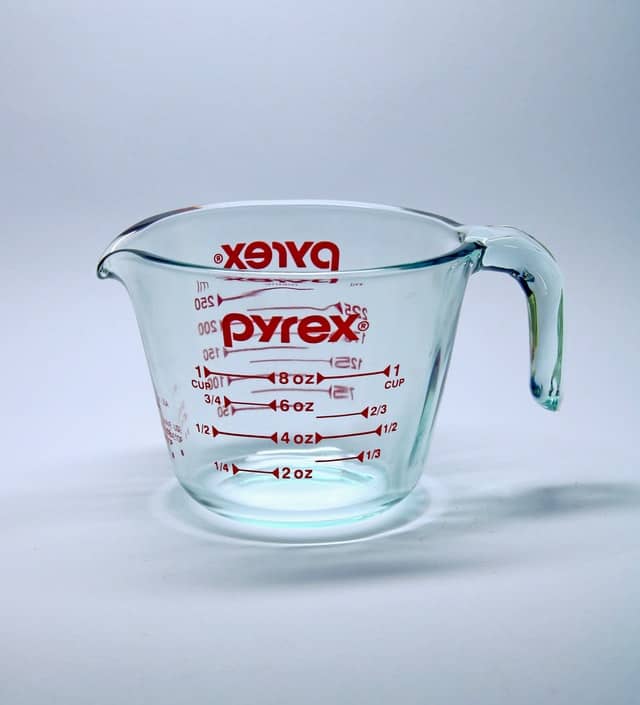
Convert 120 oz to gallons
Table of Contents
Do you need to find the answer to 120 oz to gallons? We have the answer! 120 ounces equals 0.9375 gallons.
What if you don’t have precisely 120 fl oz? We know that 120 ounces equals 0.9375 gallons, but how do you convert ounces to gallons? That’s simple! Use our 120 ounces to gallons converter to convert your ounces to gallons, one ounce at a time.
120 oz to gallons converter
Use our free 120 ounces to gallons converter to quickly convert your ounces into gallons. Just type in how many oz you have, and we will convert it to gallons for you.
Looking at the conversion calculator, you will see that we already typed in 120 ounces, which gives us an answer of 0.9375 gallons. That’s the answer to 120 oz to gallons. 120 ounces equals 0.9375 gallons.
Now it’s your turn! Just type in how many ounces you have, and our calculator will tell you how much it is in gallons. Ounces to gallons volume conversions made easy, no matter how many ounces you have.
Important note: Our calculator assumes you are converting from US liquid ounces to US liquid gallons. The math is different when converting from US dry ounces to dry gallons or from imperial fluid ounces to imperial gallons. That’s because the US measurement system is not the same as the UK’s system. In either case, a common abbreviation for a gallon is ‘gal’.
120 ounces to gallons conversion table
There are a few ways to convert liquid ounces to gallons, including using our 120 ounces to gallons conversion table. Conversion tables, also called conversion charts, let you convert with a quick glance and no math.
To convert 120 fluid ounces to gallons using our conversion table, look at the 120 oz value in the first column and match it with the corresponding 0.9375 gallons value in the second column. This means that 120 ounces equals 0.9375 gallons.
| Fluid Ounces (oz) | Gallons (gal) |
|---|---|
| 120 | 0.9375 |
| 121 | 0.945312 |
| 122 | 0.953125 |
| 123 | 0.960938 |
| 124 | 0.96875 |
| 125 | 0.976562 |
| 126 | 0.984375 |
| 127 | 0.992188 |
| 128 | 1 |
How to convert fl oz to gallons
To convert from fluid ounces to gallons, divide the number of fluid ounces by 128. This formula converts your fluid ounces to a gallon value.
For example, if you have 120 fluid ounces, the 120 fluid oz value divided by 128 ounces per gallon equals 0.9375 gallons.
A second approach is to use a conversion factor. To convert from ounces to gallons, multiply the number of ounces by 0.0078125 to find the number of gallons. 0.0078125 is the oz to gal conversion factor.
The conversion formula is: Ounces x 0.0078125 = gallons
A third approach uses a gallon conversion table that shows fluid ounces in one column and the corresponding gallons in the second column. A conversion chart lets you find the answer quickly without needing math.
Frequently asked questions about ounces to gallons
People often have specific questions about converting from ounces to gallons, or our volume units conversion tool. Here are answers to some of the most common questions about converting from ounces to gallons.
What is a fluid ounce?
A fluid ounce is a unit of measurement for liquid volumes. There are two types of fluid ounces: the US fluid ounce and the Imperial (UK) fluid ounce. Both are standard units for measuring liquids.
The US fluid ounce measures 29.5735 milliliters (ml), while the Imperial fluid ounce measures 28.4131 milliliters (ml). Because the US fluid ounce and the Imperial fluid ounce are different units of measure, it’s essential to use the appropriate conversion factor when converting between them.
The US fluid ounce is a US Customary measurement system volume unit, and its symbol is fl oz.
The imperial fluid ounce is used in the UK system of fluid ounce measures.
What is a gallon?
A US liquid gallon is a unit of volume that the government has legally defined as 231 cubic inches. Four quarts, 8 pints, or 128 ounces also equal one US liquid gallon (gal). Our conversions use the US liquid gallon in this article unless otherwise stated.
You can also use the lesser-used US dry gallon for measuring weights. Although you probably won’t encounter it, a dry gallon equals 268.8025 cubic inches.
Another type of gallon is the imperial gallon (UK), which equals 4.54609 cubic decimeters (dm). There are 160 Imperial fluid ounces in an Imperial gallon.
The abbreviation for gallon is gal.
How much is 120 oz of water?
120 fluid ounces equals 0.9375 gallons of water.
To find the answer yourself, divide 120 ounces by 128, which is the number of ounces in a gallon. The answer is 0.9375 gallons, which is equivalent to the number of gallons of water in 120 ounces of water.
How many gallons is 120 oz
120 ounces equals 0.9375 gallons (gal).
Is 120 oz a half-gallon?
No, 120 ounces is not a half-gallon. 120 ounces equals 0.9375 gallons. There are 64 ounces in a half-gallon.
How many glasses of water equal 120 ounces?
There are 15 eight-ounce glasses of water in 120 ounces.
If you have a different sized glass, divide 120 ounces by how many ounces your glass holds. For example, if you have a 10-ounce glass of water, you need 12 of these glasses to make 120 ounces.
How many ounces is 13 glasses of water?
To solve for how many ounces are 13 glasses of water, multiply 13 by 8 ounces per glass. The answer is that 13 glasses of water are equal to 104 ounces.
Convert 120 oz to liters
There are 3.54882 liters in 120 fluid ounces. In Europe, liters are written as litres.
A liter of water contains 1,000 milliliters and is equivalent to 61.0237 cubic inches (1,000 cubic centimeters).
Convert 120 liters to gallons
To convert 120 liters to gallons, multiply 120 liters by 0.2641722, which is the liters to gallons conversion factor. The answer is that 120 liters are equal to 31.7006 gallons.
Convert 120 oz to lbs
There are 16 lbs of water in 120 oz.
To convert from ounces (oz) of water to pounds (lbs), multiply the number of ounces by the number of pounds in one ounce. There are 0.0625 lbs in one oz of water.
How many quarts is 120 ounces?
There are 3.75 US liquid quarts in 120 fluid ounces.
A US liquid quart contains 32 fluid ounces. The abbreviation for a quart is ‘qt’.
How many milliliters are in 120 oz?
There are 3548.82 milliliters in 120 ounces.
Milliliters, or millilitres, are a unit of fluid volume in the metric system. The abbreviation for a milliliter is mL. The metric measurement system, used in most of the world, makes math more straightforward because it uses multiples of 10.
How many teaspoons are in 120 oz?
There are 720 teaspoons in 120 ounces of liquid.
A teaspoon is a culinary unit of measure used for recipe measurements. The abbreviation for a teaspoon is ‘tsp’.
How many tablespoons are in 120 oz?
There are 240 tablespoons in 120 ounces of liquid.
A tablespoon, equal to three teaspoons, is a culinary unit of volume measurement. The abbreviation for a tablespoon is ‘tbsp’.
How many cups is 120 oz?
There are 15 cups in 120 ounces of water. A US cup contains eight fluid ounces and is a volume unit.
To find the answer yourself, take 120 ounces and divide it by 8 ounces per cup. 120 divided by 8 equals 15, so there are 15 cups in 120 ounces.
How many cups of coffee is 120 oz?
There are 15 cups of coffee in 120 ounces. There are eight fluid ounces in one US cup.
If your coffee mug or large coffee cup holds more than 8 ounces, divide 120 ounces by the number of ounces in your cup.
How many ounces are in a cup?
There are 8 ounces in a cup.
How much is 120 fl oz in pints?
There are 7.5 pints in 120 fluid ounces.
A pint is one-eighth of a gallon, so a pint glass has 16 ounces.
How much does 120 oz of water weigh?
120 ounces of water weighs 7.8238 pounds (3.54881 kilograms) at 39.2 degrees Fahrenheit (4 degrees Celsius). You will often see pounds abbreviated as lbs and kilograms as kg.
Ounces are a unit of volume rather than a unit of weight. The weight of an ounce varies with the liquid’s density and temperature. The density of pure water at 3.92 degrees Fahrenheit (4 degrees Celsius) is 62.4 lb per cubic foot (0.9998395 grams per milliliter).
How many ounces are in a gallon?
There are 128 ounces in a gallon.
The legal definition of a gallon is a quantity of liquid that occupies 231 cubic inches (0.00378541 cubic meters in SI units). The symbol for a gallon is gal.
How many ounces are in a gallon of water?
A gallon of water measures 128 fluid ounces.
How many oz is a gallon of milk?
There are 128 fluid ounces in a gallon of milk. Ounces are a liquid volume measurement, and 128 ounces always equals one gallon.
Farmers track milk production in ounces but sell it to the dairy by the gallon. For that reason, farmers need to be able to easily convert between ounces of milk and gallons. The formula for converting ounces of milk to gallons is:
Gallons of Milk = Ounces of Milk/128
Is 128 oz the same as 1 gallon?
Yes, 128 ounces is the same as one gallon. A gallon equals 128 US fluid ounces, or about 3.785 liters. A gallon can be divided into four quarts, eight pints, or sixteen cups.
How many 8 ounce cups are in a gallon of milk?
There are sixteen 8-ounce cups in a gallon of milk.
To solve this question yourself, divide 128, which is the number of ounces in a gallon of milk, by the 8-ounce cup size. The answer is sixteen, which is the number of 8-ounce cups in a gallon of milk.
How many 32 ounce water bottles are in a gallon?
There are four 32-ounce water bottles in a gallon.
To find the answer yourself, take 128 ounces, the number of ounces in a gallon, and divide it by the 32-ounce water bottle size. 128 divided by 32 equals 4, so there are four 32 ounce water bottles in a gallon.
How many 16.9 oz water bottles make a gallon?
There are 7.574 x 16.9-oz water bottles in a gallon.
How many 16 oz water bottles make up a gallon?
There are eight 16-ounce water bottles in a gallon.
How many 8 oz water bottles does it take to make a gallon?
It takes sixteen 8-ounce water bottles to make a gallon.
What is the same as 1 gallon?
1 gallon is the same as 128 ounces, four quarts, 3.78541 liters, eight pints, sixteen cups, 256 tablespoons, 768 teaspoons, or 4546.09 milliliters.
How many fluid cups are in a gallon?
There are 16 fluid cups in a gallon. A US cup contains eight fluid ounces and is a volume unit.
To find the answer yourself, take 128, the number of ounces in a gallon, and divide it by 8, the number of ounces per cup. 128 divided by 8 equals 16, so there are 16 fluid cups in a gallon.
How many pints are in a gallon?
There are 8 pints in a gallon.
A pint is one-eighth of a gallon, and since a gallon contains 128 ounces by definition, a pint is 16 ounces. The symbol for pints is pt or p.
How many oz is 2 gallons of water?
Two gallons of water is 256 fluid ounces.
Two gallons of water have a volume of 462 cubic inches (0.00757082 cubic meters in SI units).
Is a gallon of water a day too much?
No, drinking a gallon of water a day is not too much. The Institute of Medicine (IOM) recommends that adult males drink 131 ounces of water daily. In comparison, adult females should drink 95 ounces of water daily. This amount of water ensures adequate hydration and should be part of your daily water drinking routine.
The IOM’s water intake recommendations are a relatively recent development since past recommendations followed the so-called ‘8×8’ rule. The ‘8×8’ recommendation is to drink 8 oz of water 8 times a day, for a total daily intake of 64 oz. Actual hydration needs depend on factors including your activity level, body size, and temperature. While people have different requirements for their daily water intake, drinking water enough times a day is essential to avoid dehydration.
If you’re worried about your daily water intake and whether you might be dehydrated, watch for symptoms such as fatigue, headaches, and muscle cramps. If you think you might be dehydrated, drink extra water. Consult your doctor or dietitian for further information on hydration and its associated health benefits. They can tailor a hydration plan to your body size, health conditions, and activity levels.
How much is 120 oz of water a day?
120 oz of water a day is equal to 0.9375 gallons.
Is 120 oz of water a day too much?
No, 120 oz of water is not too much. The Institute of Medicine (IOM) recommends that adult males drink 131 ounces of water per day. In comparison, adult females should drink 95 ounces of water daily.
A popular detox cleanse recommends drinking 120 ounces of water a day for optimum results. Adherents to this detox cleanse have reported improved mood and other health benefits in as little as a week. It’s also more natural than other supposed cleanses that involve maple syrup and cayenne pepper!
Is 1 gallon or 64 oz bigger?
One gallon is larger than 64 ounces. A gallon contains 128 ounces of liquid, while 64 ounces equals a half gallon.
Is 64 oz of liquid a gallon?
64 ounces of liquid is equal to a half-gallon. A gallon contains 128 ounces of liquid.
How many ounces is half a gallon of water?
There are 64 ounces in half a gallon of water.
Is 32 oz half a gallon?
No, 32 ounces is a quarter of a gallon. Half a gallon equals 64 oz.
There are 128 ounces in a US fluid gallon, so to find the answer to how many ounces are in a half-gallon by yourself, divide 128 ounces by two. The answer is 64 ounces, which is half a gallon.
How many quarts are in a gallon?
There are 4 quarts in a gallon. Each quart contains 32 ounces, and a gallon contains 128 ounces. Therefore, there are 4 quarts in one gallon.
Convert 120 quarts to gallons
120 quarts equals 30 gallons. To convert quarts to gallons, divide the number of quarts by 4. The answer will be in terms of gallons.
How many ounces are in a quart?
There are 32 ounces in a quart. The abbreviation for a quart is ‘qt’.
How many pints are in 2 quarts?
There are 4 pints in 2 quarts.
A pint glass contains 16 ounces, while a quart contains 32 ounces.
What is the rule for converting quarts to cups?
To convert a quart to a cup, multiply the number of quarts by 4. There are 4 cups in a quart.
For example, if you have 1 quart, multiply it by 4 to get 4 cups.
Are US fluid ounces and dry ounces the same?
US fluid ounces and the lesser used US dry ounces do not have the same definition. US fluid ounces are a unit of volume for liquids. In contrast, dry ounces are a dry measure of weight for dry materials. You can think of dry ounces as ounces of weight, while fluid ounces are ounces of volume.
Suppose you use a liquid-ounce measuring cup on dry materials. In that case, you can end up with a ruined recipe or a significant measurement error. That’s why it’s essential to use the correct measuring cups.
What ounce measurement do you use to measure mass (weight)? While fluid and dry ounces measure volumes, the avoirdupois ounce measures mass. This unit of mass equals 28.349523125 grams (g) or one-sixteenth of an avoirdupois pound. The avoirdupois ounce is used to measure various masses, including packaged foods, mail, and paper products.
Are Canadian and US gallons the same?
No, Canadian and US gallons do not have the same definition. Canada uses the Imperial gallon for volume measurements, also known as the UK gallon. By definition, an Imperial gallon contains 22.75% more fluid than a US gallon. US gallons are a United States Customary measurement system volume unit.
Are Canadian gallons Imperial?
Yes, Canadian gallons are Imperial gallons. While Canada uses Imperial gallons, most quantities in Canada are measured in metric units such as the liter.
How many ounces are in a Canadian gallon?
There are 160 ounces in a Canadian gallon. Canada uses the Imperial gallon, also known as the UK gallon.
An Imperial gallon contains 22.75% more fluid than a US gallon. A US fluid ounce contains 4.083 percent more liquid than an imperial fluid ounce.
Are US and UK gallons the same?
No, the US and UK gallons are not the same, as the size of a gallon differs between the two systems. A UK gallon, also called an imperial gallon, contains 22.75% more fluid than a US gallon. Remember that the US and UK measurement systems are not the same to avoid math errors.
One US liquid gallon has 128 ounces, which is the same as 3.785 liters. Meanwhile, there are 160 fluid ounces in one UK liquid gallon, which is equivalent to 4.646 liters. Don’t confuse the US system with the British Imperial system of units to avoid math errors and misunderstandings. While they are both used to describe quantities such as liquid gallon measures, they’re not the same.
There are actually three gallons in current use: the imperial gallon used in the United Kingdom and semi-officially within Canada, the US gallon used in the United States, and the lesser-used US dry gallon used for measuring weights.
Why are UK and US gallons different?
UK and US gallons differ because, in 1824, the UK standardized its measurement system under the UK Imperial System, while the US did not. Interestingly, before 1824, definition of a UK and US gallon was the same because they both used the British Imperial System! Today, the US system is considered a variation of the Imperial system.
The United States Customary Measurement Systems still uses the measurement of Queen Anne’s gallon of wine, which was 3.785 liters, as their standard liquid measurement. Nowadays, America still uses the old British imperial measurement system as part of its own system of US customary units.
What is a dilution ratio?
A dilution ratio is the proportion of a substance that is mixed with water to create a solution. There are several types of dilution ratios, including:
- Absolute Dilution Ratio: This is the most basic dilution ratio, referring to the total volume of liquid used to dilute the active ingredient.
- Molar Dilution Ratio: This ratio measures how many moles of solute are present in each liter of solvent.
- Mass/Volume Dilution Ratio: This measures how much mass (in grams) of solute is diluted by a given volume (in milliliters) of solvent.
- Volume/Volume Dilution Ratio: This ratio refers to the number of milliliters of solvent used to dissolve a given amount of solute.
- Mass/Mass Dilution Ratio: This type of dilution ratio is used when dealing with substances that are not soluble in water. The mass/mass ratio is determined by dividing the mass of the solute by the mass of the solvent. This type of dilution ratio is most often used when preparing stock solutions.
An example of a dilution ratio is 2 ounces per gallon dilution (2 oz to 1 gallon). This ratio means you dilute 2 ounces of the substance into 1 gallon of water.
It is important to note that when using volume measurements, the same units must be used for both the solute and the solvent. For example, if you are measuring milliliters of water to dissolve grams of salt, your dilution ratio would be mass/volume. However, if you measure liters of water to dissolve grams of salt, your dilution ratio would be in volume/volume. Finally, it is also important to remember that the larger the solvent volume, the more diluted the solution will be.
Conclusion
In conclusion, 120 ounces equals 0.9375 gallons.