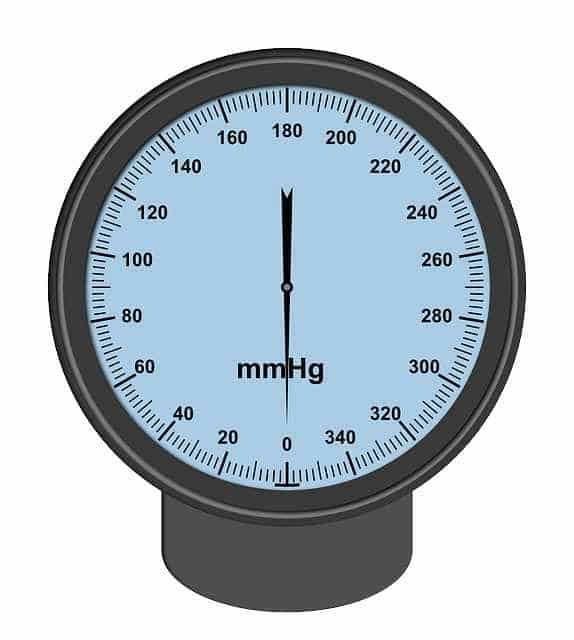
Convert 7 mmHg to atm (Millimeters of Mercury To Atmospheres Pressure Conversion Calculator)
Do you need to convert 7 mmHg to atm? 7 mmHg equals 0.00921053 atm.
What if you don’t have precisely 7 mmHg? We know that 7 millimeters of mercury equal 0.00921053 standard atmospheres, but how do you convert mmHg to atm? That’s simple! Our 7 mmHg to atm unit converter helps you convert millimeters of mercury into standard atmospheres, one mmHg at a time.
7 mmHg to atm conversion calculator
Use our free 7 mmHg to atm conversion calculator to quickly calculate how much your millimeters of mercury are in standard atmospheres. Just type in how many millimeters of mercury you have, and we will convert it into standard atmospheres for you.
The mmHg to atm calculator shows that 7 mmHg equals 0.00921053 atm. That’s the answer to 7 mmHg to atm. 7 milliliters of mercury equals 0.00921053 standard atmospheres.
Now it’s your turn! To use our mmHg to atm online calculator, simply enter the amount of mmHg you have. Your results will appear in atmospheres. Millimeter mercury to atmospheres is made easy, no matter how many mmHg you have. Whether you have 7 mmHg or 474 mmHg, we’ll find the solution for you.
7 mmHg to atm conversion table
A quick way to convert mmHg to atm is by using a conversion table that includes the most common unit conversions. Conversion tables are charts that let you convert between units without having to do any math.
To convert 7 mmHg to atm, find the 7 mmHg value in the first column of the conversion table and match it with the corresponding 0.00921053 atm value in the second column. That means that 7 mmHg equals 0.00921053 atm.
| Millimeters of Mercury (mmhg) | Standard Atmospheres (atm) |
|---|---|
| 7 | 0.00921053 |
| 15 | 0.0197368 |
| 30 | 0.0394737 |
| 50 | 0.0657895 |
| 75 | 0.0986842 |
| 100 | 0.131579 |
| 200 | 0.263158 |
| 300 | 0.394737 |
| 400 | 0.526316 |
How do you convert mmHg to atm?
You have two conversion options to convert millimeters of mercury (mmHg) to standard atmospheres (atm). The first option is to divide the mmHg value by 760, which is the number of mmHg in 1 atm. The second option is to multiply the mmHg value by 0.0013157894736842. As shown below, using the example of 7 mmHg to atm, both approaches will give you the correct solution.
Conversion By Division:
Division Conversion Formula: atm=mmHg ÷ 760
atm=7 mmHg ÷ 760=0.00921053
Conversion By Multiplication:
Multiplication Conversion Formula: atm=mmHg × 0.0013157894736842
atm=7 mmHg × 0.0013157894736842=0.00921053
Why is pressure measured in mmHg?
Historically, pressures were measured in millimeters of mercury (mmHg) because mercury is the densest liquid at room temperature. A dense liquid is helpful for pressure column applications because it minimizes the height needed for a column.
A pressure column, also called a manometer, is a pressure measurement device. There is a practical height limitation on the pressure column when it is used in confined spaces in laboratories, meteorology, and aviation. For this reason, the density of the liquid used in a manometer is an important practical consideration.
To measure one standard atmosphere of pressure, you would need a column that is 760 mm tall if you were to use mercury as the liquid. On the other hand, if you use a less dense fluid, the required height of the column is greater. In the case of water, you would need a column 10 meters high to measure one standard atmosphere!
Why is 1 atm 760 mmHg?
1 atm equals 760 mmHg because the pressure unit “atmosphere” was originally defined as the pressure exerted by the weight of a column of mercury 1 inch in diameter and 760 inches high at 0°C.
Is 1 mmHg the same as 760 atm?
No, there are 577,600 mmHg in 760 atm. 1 mmHg is equal to 0.0013157894736842 atm.
760 mmHg to atm
What does 760 mmHg represent?
760 mmHg is a unit of pressure that is equivalent to 101325 pascals, which is the standard unit of pressure in the International System of Units (SI). It is commonly used to express the pressure exerted by gases and blood vessels.
How many atms are in 1 mmHg?
There is 0.00131579 atm in 1 mmHg.
Is pressure always 1 atm?
No, pressure is not always 1 atm. Pressure can vary depending on various factors such as elevation, temperature, and atmospheric conditions.
7 mmHg to kPa
7 mmHg is equal to 0.933257 kPa. To convert from mmHg to kPa multiply the mmHg value by 0.133322.
7 mmHg to Pa
7 millimeters of mercury (mmHg) equals 933.257 Pascals (Pa).
7 mmHg to bar
7 mmHg is equal to 0.00933257 bar.
7 mmHg to psi
7 mmHg equals 0.135357 pounds per square inch (psi) of pressure.
7 mmHg to torr
7 mmHg equals 7 torr.
7 inHg to mmHg
7 inches of mercury (inHg) equals 12039.6 millimeters of mercury (mmHg).
Frequently asked questions: Millimeters of mercury to standard atmospheres
People often have specific questions about converting from mmHg to atm. Here are the answers to some of the most common conversions and questions people ask about mmHg to atm.
What does mmHg stand for?
An mmHg is a non-SI unit of pressure. It is equal to the pressure that is exerted by a one-millimeter-high volume of liquid mercury under standard gravity. It is a manometric unit of pressure and is an abbreviation for millimeters of mercury. You will most frequently encounter mmHg from blood pressure readings and a meteorologist’s weather reports in everyday life.
What is one atm equal to?
A standard atmosphere (atm) is a unit of pressure equal to 101,325 Pa, 101.325 kPa, 760 mmHg, 1.01325 bar, 760 torr, 4.6959 psi, or 1 ata. It is equivalent to the average atmospheric pressure on Earth at sea level.
What is the relationship between mmHg and kPa?
There are 7.500615758456564 mmHg in 1 kPa. To convert from kPa to mmHg, multiply the kPa value by 7.500615758456564. If you need to convert from mmHg to kPa, multiply the mmHg value by 0.133322387415.
The SI unit of pressure is the Pascal, which is why some countries take blood pressure readings in kilopascals (kPa).
Is atm greater than mmHg?
Yes, one standard atmosphere (atm) is greater than one millimeter of mercury (mmHg). There are 760 mmHg in one standard atmosphere but only 0.0013157894736842 standard atmospheres (atm) in one mmHg.
What is atmospheric pressure at sea level in mmHg?
The atmospheric pressure at sea level is 760 mmHg. The pressure caused by the molecules comprising air above us is called atmospheric pressure. This pressure is caused by gravity pulling the air towards the Earth.
How do you convert barometric pressure to atmospheric pressure?
To convert barometric pressure to atmospheric pressure, multiply the barometric pressure in atmospheres (atm) by 760 millimeters of mercury.
How do you convert blood pressure to mmHg?
In countries where blood pressure is reported in kPa (kilopascals), multiply the kPa blood pressure reading by 7.500615758456564. The resulting value will be in mmHg units.
In much of the world, you do not need to convert blood pressure readings to mmHg. The reason why no conversion is required is that the blood pressure measurement is made in mmHg!
Ideal gas law: Can you use mmHg in PV nRT?
You can use millimeters of mercury (mmHg) in the PV nRT ideal gas equation. The ideal gas constant R has different values depending on the units of pressure, temperature, and volume chosen for the ideal gas equation. When the pressure in a container is measured in mmHg, the value of the ideal gas constant R:
R=62.3 L • mmHG/K • mol where L=liters, mmHg=millimeters of mercury, K=temperature in Kelvin, and mol=moles
What is atm in moles?
According to the Ideal Gas Law, 1 atm equals the pressure exerted by 1 mole of a gas occupying a volume of 22.4 liters at 273 degrees Kelvin. This is the temperature and pressure known as standard temperature and pressure (STP).
What unit is equivalent to mmHg?
The unit torr is equivalent to mmHg and is named after the inventor of the barometer, Evangelista Torricelli.
How do you convert cm Hg to atm?
To convert from cmHg (centimeters of mercury) to atm (standard atmospheres), multiply cm Hg by 0.013158. The result will be your answer in atm units.
For example, 76 cm Hg multiplied by 0.013158 equals 1 atm.
How to convert barometric pressure from inches hg to mmHg
To convert from inches of mercury to millimeters of mercury, multiply the inches hg value by 25.4. This is shown in the equation below.
mmHg=inches hg × 25.4
Conclusion
In conclusion, 7 mmHg equals 0.00921053 atm.
See the related articles below to learn more about converting millimeters of mercury to atmospheres.